Fly Ash Bricks Raw Material – Complete Premium Guide
Everything you need to know about selecting quality raw materials for strong, durable and profitable fly ash bricks.
4
Core Raw Materials
60:30:10
Standard Ratio
★★★★★
Dry Fly Ash Rated
What is Fly Ash Bricks Raw Material?
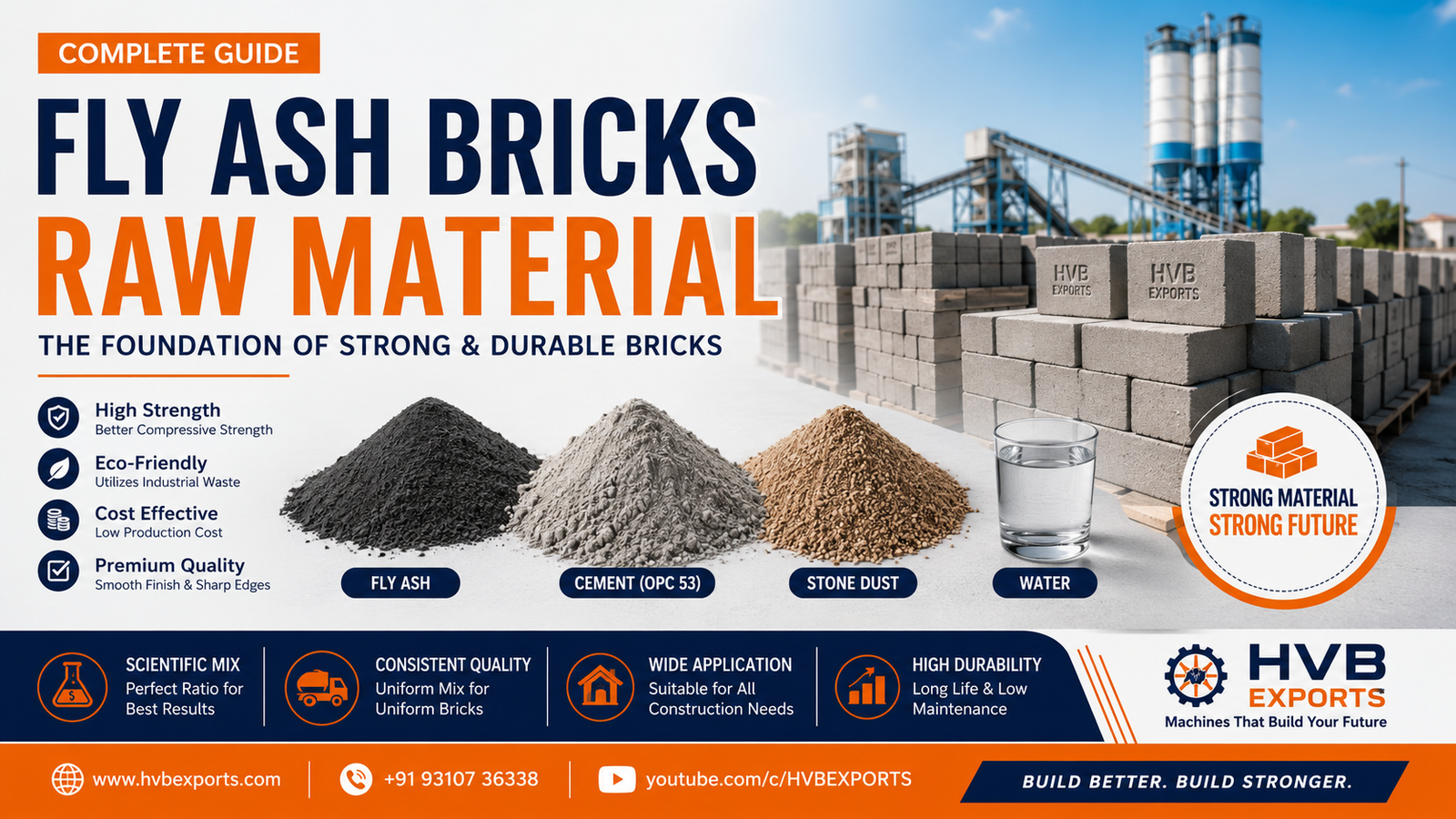
The main raw materials include Dry Fly Ash, OPC 53 Grade Cement, Stone Dust or Sand, and clean water. Proper selection and mixing of these materials directly affects brick strength, finish, durability, and production cost.
Fly Ash Bricks Raw Material List
Choosing the right fly ash bricks raw material is the biggest factor affecting brick strength, finish, production cost and customer satisfaction.
1. Dry Fly Ash
Dry Fly Ash is the most important raw material for manufacturing premium quality fly ash bricks. It improves smooth finishing, sharp edges and reduces brick weight.
- ✔ Smooth Surface
- ✔ Better Strength
- ✔ Less Water Absorption
- ✔ Premium Finish
2. OPC 53 Grade Cement
OPC 53 Grade Cement provides high early strength and better bonding. Always use fresh cement for consistent production.
- ✔ High Strength
- ✔ Fast Setting
- ✔ Better Bonding
- ✔ Consistent Quality
3. Stone Dust
Stone Dust improves density, compressive strength and gives bricks a proper shape with sharp corners.
- ✔ Cost Effective
- ✔ Better Density
- ✔ Sharp Edges
- ✔ Easy Availability
4. Water
Always use clean water without salt, chemicals or impurities. Excess water reduces brick strength and causes cracks.
- ✔ Clean Water
- ✔ Controlled Quantity
- ✔ Better Hydration
- ✔ Strong Bonding
Dry Fly Ash vs Pond Ash
| Feature | Dry Fly Ash | Pond Ash |
|---|---|---|
| Quality | Excellent | Average |
| Colour | Light Grey / White | Dark Grey / Black |
| Moisture | Very Low | Higher |
| Brick Finish | Smooth | Average |
| Sharp Edges | Excellent | Lower |
| Recommended | ★★★★★ | ★★★☆☆ |
Recommended Fly Ash Brick Mixing Ratios
| Purpose | Fly Ash | Stone Dust | Cement |
|---|---|---|---|
| Standard Ratio | 60% | 30% | 10% |
| Profitable Ratio | 55% | 35% | 10% |
| Finishing Ratio | 80% | 12% | 8% |
| Rough Surface Ratio | 40% | 52% | 8% |
Different ratios may be used depending on finishing, roughness, and cost objectives.
Common Raw Material Mistakes
❌ Wet Fly Ash
Produces weak bricks and rounded edges.
❌ Low Grade Cement
Reduces compressive strength significantly.
❌ Excess Water
Causes cracks and poor density.
❌ Improper Mixing
Creates uneven colour and inconsistent strength.
❌ Dirty Storage
Moisture damages cement and fly ash quality.
❌ Wrong Material Ratio
Increases production cost and customer complaints.
Raw Material Storage Tips
Keep Cement Dry
Store cement on wooden pallets in a dry covered area. Never place bags directly on the floor.
Protect Fly Ash
Keep fly ash protected from rain and moisture to maintain consistent brick quality.
Clean Aggregates
Use clean stone dust or sand free from clay, organic matter and large impurities.
Measure Accurately
Always weigh raw materials correctly for consistent production and lower wastage.
Quality Checklist Before Production
| Checkpoint | Status |
|---|---|
| Dry Fly Ash Available | ✔ |
| Fresh OPC 53 Cement | ✔ |
| Clean Stone Dust / Sand | ✔ |
| Correct Water Quantity | ✔ |
| Proper Mixing Time | ✔ |
| Correct Curing Plan | ✔ |
Why Choose HVB Exports?
🏭 Industry Experience
Professional guidance for fly ash brick manufacturing plants and machinery.
⚙ Complete Plant Solutions
Machines, pan mixers, moulds and production support from one place.
📈 Cost Optimization
Get guidance on raw material selection and efficient production planning.
🌍 Nationwide Support
Support for new entrepreneurs and existing manufacturers across India.
Frequently Asked Questions
Which fly ash is best for brick manufacturing?
Dry Fly Ash is generally preferred because it provides smoother finishing, better strength and sharper brick edges.
Which cement should be used?
Use fresh OPC 53 Grade Cement for better bonding and consistent compressive strength.
Can I use river sand or pond ash?
Yes, depending on your production requirements, but clean stone dust and dry fly ash are commonly preferred for consistent quality. Pond ash is usually mixed with dry fly ash for better results.
How important is water quality?
Very important. Use clean water and avoid excess water because it can reduce brick strength.
How can I reduce production cost?
Use a consistent raw material ratio, reduce wastage and monitor your production cost regularly.
Start Your Fly Ash Brick Business Today
Looking for a complete fly ash brick making machine setup, pan mixer, moulds or technical guidance? HVB Exports is here to help you build a successful brick manufacturing business.
Visit HVB Exports Brick Cost Calculator